Last Updated: November 2, 2026
Quick Summary
Most home electrical problems come down to an overloaded circuit, a short circuit, or a loose connection, and the breaker trips to cut power before heat builds up. Treat every trip as information: if a breaker trips instantly on reset, stop resetting it and call a licensed electrician.
- An overload is a capacity problem, while a short circuit is a safety problem.
- Warm outlet covers, buzzing switches, and a fishy odor point to faulty wiring.
- Homes built from the mid-1960s to the late 1970s often used aluminum branch wiring.
- A tripped GFCI receptacle protects every outlet downstream of it.
- A Level 2 charger needs a dedicated circuit and often a panel upgrade.
Table of Contents
- Why Does My Circuit Breaker Keep Tripping?
- Signs of Faulty Electrical Wiring You Should Never Ignore
- How to Diagnose Dead Outlets, Flickering Lights, and Surges
- Smart Home and EV Charger Troubleshooting
- What Does Electrical Troubleshooting Cost?
- When to Call Onsite Electric USA for Home Electrical Problems
- Frequently Asked Questions
Why Does My Circuit Breaker Keep Tripping?
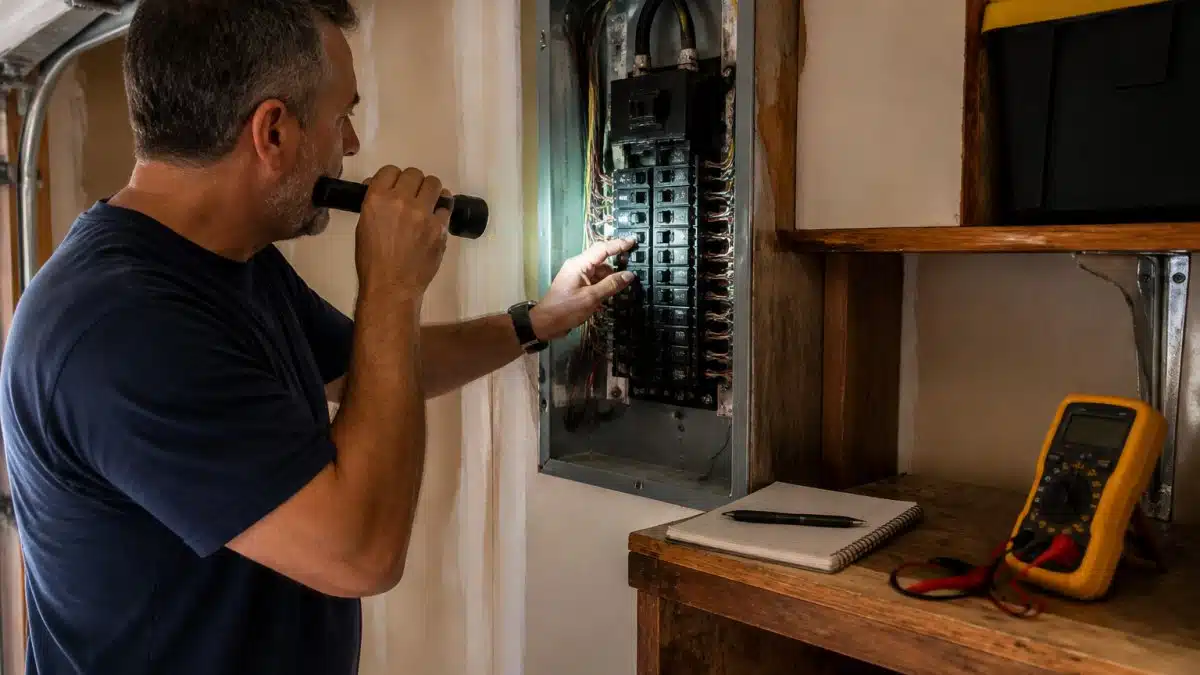
A circuit breaker trips because the electrical load on that circuit exceeds its rating, or because a fault is sending current where it should not go. The breaker is doing its job: it cuts power before heat builds up. Treat every trip as information, not an annoyance. Below, we explain the most common causes of home electrical problems and how to tell a harmless overload from a genuine hazard.
Overloaded Circuits vs. Short Circuits
An overload happens when too many devices draw power from one circuit. A short circuit happens when a hot wire touches a neutral or ground wire. The first is a capacity problem. The second is a safety problem. Watch out: if a breaker trips the instant you reset it, stop resetting it and call a licensed electrician.
Ground Fault and Arc Fault Breakers
Ground fault circuit interrupter breakers protect wet areas like kitchens and baths. Arc fault breakers detect the small sparks that damaged wiring produces. Both trip for good reasons. If one keeps tripping, the circuit needs a proper diagnostic, not a bigger breaker.
Signs of Faulty Electrical Wiring You Should Never Ignore
Signs of faulty electrical wiring include warm or discolored outlet covers, switches that buzz or feel warm, a faint burning or fishy odor, lights that flicker when appliances cycle, scorched spots around a receptacle, and breakers that trip without an obvious overload. The U.S. Fire Administration electrical fire data tracks how often home electrical failures lead to fires, and the common thread is heat at a loose or damaged connection rather than a dramatic spark.
What separates a nuisance symptom from a hazard is repetition and location. A single flicker when the refrigerator compressor kicks on is normal voltage drop. A flicker that happens every time the dryer runs, or a switch plate that is warm to the touch hours after the light was turned off, is heat building at a resistance point. That is the mechanism behind most electrical fires: current through a poor connection generates heat, heat carbonizes insulation, and carbonized insulation eventually arcs.
Aluminum vs. Copper Wiring in Older Homes
Homes built roughly between the mid-1960s and the late 1970s often used aluminum branch-circuit wiring. First, aluminum expands and contracts more than copper as it heats and cools, so connections under screws and wire nuts loosen over time. Second, aluminum oxidizes at the surface, and that oxide layer adds resistance at exactly the point where you need a clean connection.
You can often identify aluminum branch wiring without opening a wall. Look at the cable jacket in an unfinished basement or attic: aluminum cable is usually marked AL or ALUMINUM on the sheath, and the conductors are silver-colored rather than the reddish tone of copper.
Watch out: do not simply swap a standard receptacle onto an aluminum circuit or tighten a loose aluminum connection and call it fixed. The safe options are usually a licensed evaluation followed by an accepted remedy chosen by the electrician.
Copper remains the standard for new branch wiring, and the practical takeaway for an older home is simple: know what you have before you add load. Adding a heavy new appliance to an already marginal aluminum circuit is how a manageable risk becomes a fire.
How to Diagnose Dead Outlets, Flickering Lights, and Surges
Start with the simplest checks before you touch the electrical panel, and work from the symptom back toward the source. A dead outlet may be a tripped breaker, a failed receptacle, a loose neutral wire, or a downstream outlet that has failed and taken the rest of the circuit with it. Flickering lights usually mean a loose connection somewhere on the circuit, though a dimming that tracks with a large appliance is more often voltage drop from an overloaded circuit or an undersized service.
The key to diagnosing any of these is understanding that receptacles on a circuit are usually daisy-chained: power runs from the panel to the first outlet, then to the next, and so on. That wiring order explains most confusing symptoms. If one outlet is dead but the rest of the circuit works, the problem is at that outlet or in the short run of cable feeding it. If several outlets on the same circuit are dead, the fault is upstream, at the breaker, at the first outlet in the chain, or at a loose neutral shared by the group.
Step-by-Step Diagnostic Flowchart
Follow these steps in order, and stop at the first sign of heat, smoke, or a burning smell:
- Check whether other outlets on the same circuit work, this tells you whether the fault is local or upstream
- Reset the breaker once and note whether it holds, trips instantly, or trips after a delay
- Test the dead outlet with a multimeter or non-contact voltage tester for voltage at the hot slot
- If voltage is present but the device does not work, the receptacle itself has likely failed
- If voltage is absent, check the upstream outlet in the chain for a loose connection or a tripped GFCI feeding it
- Inspect the junction box and device boxes for loose, backstabbed, or scorched wiring
- Confirm any surge protector on the circuit is still functioning rather than simply passing power
- Call a licensed electrician if the fault repeats or if you find heat damage
|
Symptom |
Likely Cause |
First Check |
|---|---|---|
|
Breaker trips instantly on reset |
Short circuit or ground fault |
Stop resetting, call an electrician |
|
Breaker trips after minutes of use |
Overload |
Add up the load on the circuit and spread it |
|
One dead outlet, rest of circuit live |
Failed receptacle or loose connection at that device |
Test voltage at the outlet |
|
Several dead outlets on one circuit |
Open neutral or tripped upstream GFCI |
Check the first outlet in the chain and any GFCI feeding it |
|
Lights dim when a large appliance runs |
Voltage drop or overload |
Compare circuit rating to appliance draw |
|
Lights flicker steadily, no appliance cycling |
Loose connection |
Shut off the circuit and inspect connections |
|
Buzzing at the panel |
Loose breaker or bus connection |
Shut off main power, call for repair |
A few mechanisms are worth knowing because they change what you do next. A tripped GFCI receptacle protects every outlet downstream of it, so a dead outlet in a bathroom or kitchen is often just a GFCI that needs resetting at the upstream device. A loose neutral is more dangerous than a loose hot, because it can cause voltage to swing high on part of the circuit while another part goes dim, which is why flickering paired with unusually bright bulbs is a stop-and-call signal rather than a wait-and-see. And a surge protector that has absorbed a large event may still pass power while no longer protecting anything, so a functioning indicator light matters more than the device turning on.
Watch out: never remove the panel cover or probe inside the panel to chase a dead circuit unless you are qualified to work in it. The main lugs remain energized even with the main breaker off, and that is where serious injuries happen.
Smart Home and EV Charger Troubleshooting
Smart devices and EV chargers add continuous load that older circuits were never sized for. A Level 2 charger needs a dedicated circuit and often a panel upgrade. If your smart switches drop offline or your charger trips a breaker, the circuit is usually undersized. As customer Fatimeh Barrie put it, “Joseph installed a Level 2 Tesla Charger for us.”
What Does Electrical Troubleshooting Cost?
Electrical troubleshooting cost depends on the fault, the age of the wiring, and whether a panel upgrade is needed. Contact us for current pricing on your specific job. Customer Raymond Menne said: “First electrical company that could quote an approximate cost for service.”
When to Call Onsite Electric USA for Home Electrical Problems
Call a licensed electrician when a breaker will not reset, when you smell burning, or when wiring is aluminum or outdated. Our owner, José Santiago, brings nearly three decades of experience. The company offers a lifetime workmanship warranty and direct communication with the owner who performs the work.
Frequently Asked Questions
What are the most common electrical problems that occur in homes?
The most frequent issues include tripped circuit breakers, flickering lights, dead outlets, and overloaded circuits. In older homes, faulty wiring and aluminum branch circuits are common culprits. Surges from storms or utility switching can also damage electronics and cause intermittent power failures. Smart home devices and EV chargers add new load patterns that sometimes reveal underlying capacity or grounding issues. A licensed electrician can perform a diagnostic to pinpoint the cause and recommend repairs.
How can I safely troubleshoot a circuit breaker that keeps tripping?
First, unplug devices on that circuit and reset the breaker once. If it trips immediately with nothing plugged in, stop and call a professional. If it holds, plug devices back one at a time to find the culprit. Never tape a breaker in the on position or replace it with a larger amperage without verifying wire size. Persistent tripping often signals an overload, short circuit, or ground fault. A multimeter and continuity test can help a pro trace the fault safely.
What are some signs that my house has faulty electrical wiring?
Watch for outlets that feel warm, discolored switch plates, a burning odor near receptacles, and lights that dim or flicker when appliances cycle. Buzzing sounds from the panel, frequent breaker trips, and mild shocks from fixtures are red flags. In homes built before the 1970s, aluminum wiring and deteriorated insulation raise fire risk. If you notice any of these signs of faulty electrical wiring, schedule an inspection rather than opening walls yourself.
When is it time to call a professional electrician for home repairs?
Call a licensed electrician for any burning smell, visible sparks, warm outlets, or repeated breaker trips after load reduction. If you lack a multimeter or aren’t comfortable testing voltage, don’t attempt repairs. Electrical troubleshooting cost varies with the issue, but a diagnostic visit is cheaper than fire damage. For panel upgrades, EV charger circuits, or smart home integration, hire a pro to ensure code compliance and safety.
Troubleshooting common home electrical problems has limits, and safety is the one you should not test. If a fault keeps returning, let Onsite Electric USA handle it. We offer transparent pricing, direct communication with the owner, and code-compliant repairs backed by a lifetime workmanship warranty. Get started with Onsite Electric USA and get a fast quote for safe, reliable power.


